Use the moisture-control pathway
Bathroom moisture control works as a sequence. First measure the pattern. Then reduce avoidable moisture, confirm that damp air can leave and replacement air can enter, and compare equipment only after the existing pathway is understood.
- Measure: Record the pre-shower baseline, post-shower rise and recovery.
- Observe surfaces: Note where water remains and whether one area behaves differently.
- Check the air path: Confirm that the fan or window strategy can move damp air out safely.
- Reduce the load: Shorten avoidable evaporation from standing water and soaked fabrics.
- Verify the result: Repeat the same test after changing one variable.
1. Measure bathroom humidity correctly
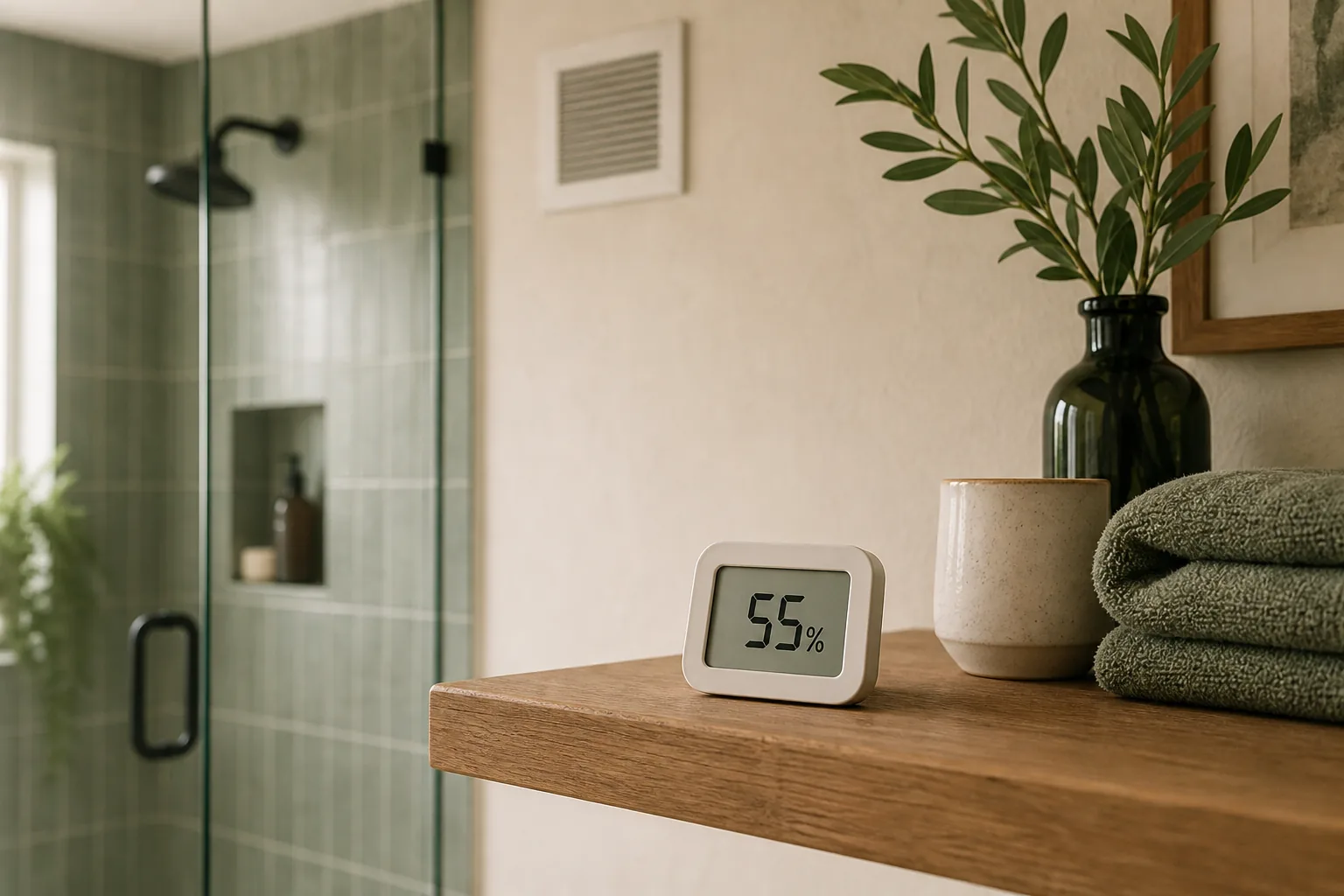
Use one hygrometer in a consistent, dry location away from direct spray, concentrated steam, cold glass and the exhaust grille. Record relative humidity and temperature before bathing, shortly after the shower and at regular intervals while the room recovers.
Learn how to measure bathroom humidity
| Pattern | Useful next step |
|---|---|
| Brief rise, then steady recovery | Keep the repeatable routine and continue watching surface drying. |
| Humidity stays elevated and surfaces remain wet | Review ventilation, replacement air, damp fabrics and the wider home's humidity. |
| One fixed wet or stained area returns | Do not assume ordinary condensation; investigate leaks or building defects. |
| Humidity is high without recent bathing | Look beyond the shower event for other moisture sources. |
2. Reduce lingering condensation
A fogged mirror after a hot shower is common. The more useful warning signs are slow recovery, water remaining on porous finishes, recurring ceiling or wall wetness and a pattern that is getting worse.
Use the bathroom condensation checklist
3. Check ventilation as a complete system
A fan needs an outdoor duct route and an intended source of replacement air. Motor noise alone does not prove useful airflow. Dust, restrictive ductwork, a blocked exterior cap or a tightly closed room can all reduce performance.
- Trace whether the bathroom fan vents outdoors
- Clean an accessible bathroom exhaust fan safely
- Set and verify a post-shower fan runtime
- Choose a practical bathroom fan size in CFM
- Compare an exhaust fan with an open window
4. Compare equipment only after the basics
An exhaust fan moves damp air out of the bathroom; a dehumidifier removes water from air that stays indoors. They are not interchangeable. A portable appliance also needs a safe, manufacturer-approved location away from splash and reach zones.
Compare a bathroom dehumidifier and exhaust fan
5. Know when the pattern needs direct inspection
Water dripping from electrical equipment, recurring staining, soft materials, bubbling paint, roof- or rain-related wetness, suspected plumbing leaks and persistent musty odor need more than a humidity reading.
A simple one-week test
- Record the bathroom baseline before a typical shower.
- Use the same meter location and similar shower conditions.
- Record humidity after bathing and at regular recovery intervals.
- Note when visible water disappears from mirrors, windows and walls.
- Change one low-risk variable, such as clearing a grille or removing standing surface water.
- Repeat the test and compare the recovery curve rather than one peak.
Download the humidity recovery log