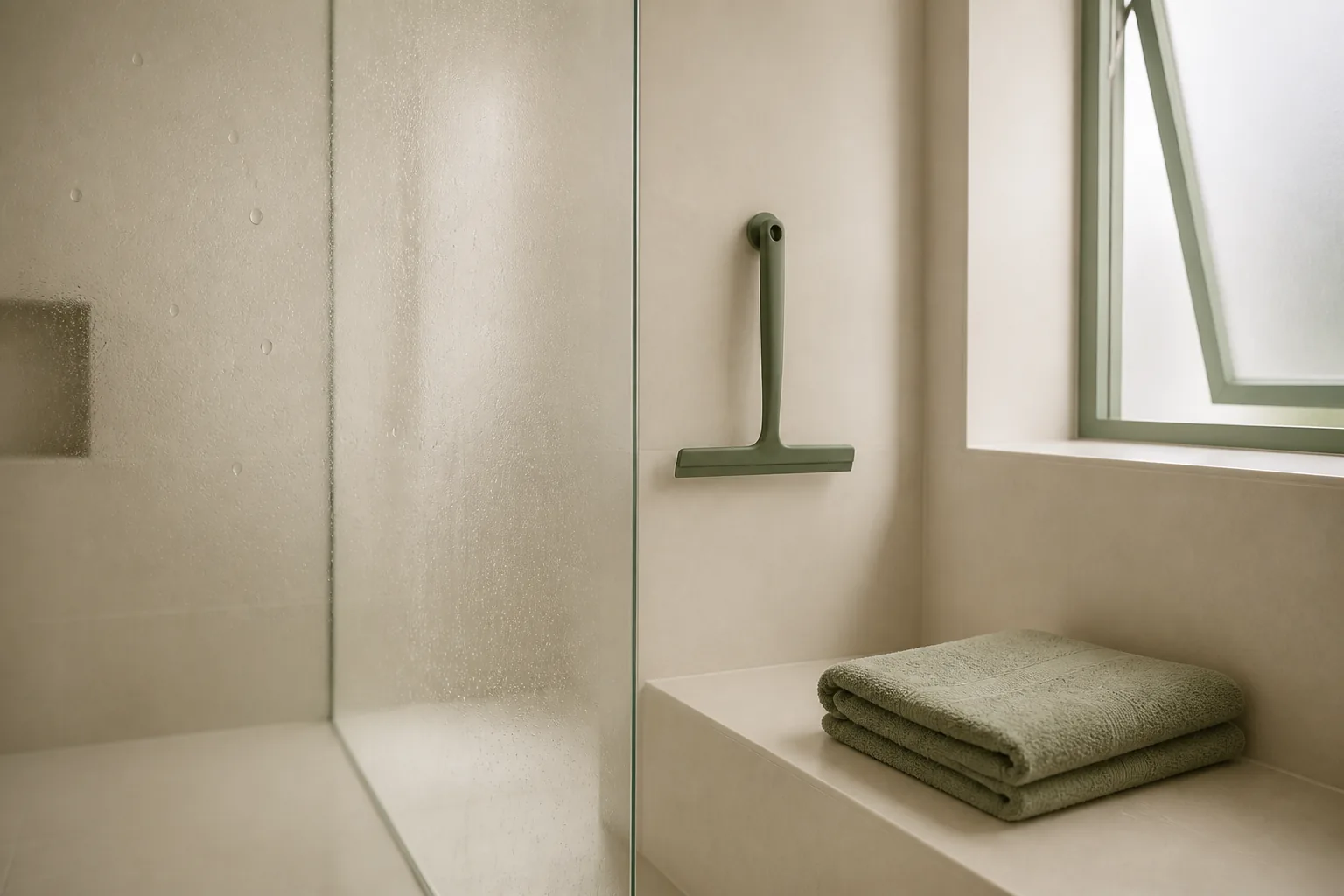
Is the condensation normal, persistent or urgent?
| Pattern | What it suggests | Next step |
|---|---|---|
| Mirror fog or light moisture that clears as the room dries | A normal short moisture event may be resolving | Keep using the fan and watch the recovery trend |
| Walls, ceiling or window stay wet; odor returns; paint or caulk remains damp | Moisture is clearing too slowly or a cold surface is repeatedly condensing water | Measure recovery, check airflow and reduce retained surface water |
| Water drips from the fan, staining spreads when nobody bathes, materials soften, or water reaches electrical equipment | Condensation alone may not explain the pattern | Stop using affected electrical equipment and arrange qualified inspection |
Why condensation gets bad in a bathroom
Condensation forms when moisture-laden air reaches a surface cold enough for water vapor to become liquid. A shower adds moisture quickly, while tile, mirrors, windows and exterior walls may remain cooler than the room air. The amount of water you see depends on the moisture load, surface temperature and how effectively damp air leaves.
Heavy or lingering condensation often means more than one condition is working together:
- Long, hot showers create a larger moisture load.
- An exhaust fan has weak airflow, a dirty grille or an unsuitable duct route.
- The bathroom has no clear path for replacement air to enter.
- Cold windows, exterior walls or ceilings reach the dew point sooner.
- Wet towels, mats and shower surfaces keep adding moisture after bathing.
- The wider home is already humid before the shower begins.
Condensation diagnosis matrix
| Likely factor | Safe check | Useful response |
|---|---|---|
| High moisture load | Compare shorter and longer showers under similar conditions | Reduce avoidable steam and wipe or squeegee large wet surfaces |
| Weak exhaust or restricted duct | Check whether air clears while the fan runs and inspect only accessible grilles or exterior terminations | Clean the grille, verify the duct route and have airflow problems assessed |
| Missing replacement-air path | Compare fan performance with the bathroom door safely ajar | Provide the intended transfer-air path without defeating fire or code requirements |
| Cold local surface | Note whether moisture repeatedly forms first on one window, wall or ceiling area | Investigate insulation, thermal bridging or glazing rather than only increasing fan time |
| High starting humidity | Record the pre-shower baseline and recovery curve | Address the wider indoor moisture source if the bathroom starts high |
| Controls are not keeping the fan on long enough | Compare measured recovery with the current run time | Consider whether a timer or humidity-sensing control better fits the observed pattern |
1. Observe the pattern before changing it
Note where water collects, when it begins and how long it remains. Compare several similar showers instead of relying on one unusual event. Check the mirror, window, exterior wall, ceiling above the shower and any painted or porous surfaces.
Also note whether the bathroom is damp when no one has showered. Condensation tied closely to bathing points toward a short moisture event and recovery problem. Moisture that appears independently, returns in one fixed spot or spreads after rain may require a different investigation.
2. Create a clear air path
An exhaust fan cannot move air effectively if replacement air has no intended way into the bathroom. Avoid blocking door undercuts or transfer grilles. Do not cut doors or alter ventilation openings without understanding local requirements and the building design.
If the bathroom uses a window, outdoor conditions matter. An open window may help when outside air supports drying, but rain, high outdoor moisture, smoke, extreme temperatures, security and privacy can make it unsuitable. See our exhaust fan versus open window comparison.
3. Use ventilation during and after bathing
Run a functioning exhaust fan during the moisture-producing activity and long enough afterward for the room to move toward its usual condition. A noisy fan is not proof of useful airflow. Dust at the grille, a restricted duct, a blocked exterior outlet or a long duct path can reduce performance.
Confirm that the fan is intended to discharge outdoors. Damp air should not be sent into an attic, wall cavity or other enclosed building space. Electrical and duct repairs belong with qualified professionals and must follow local requirements.
4. Remove avoidable surface water
A squeegee can reduce the water left on shower doors and walls. Spread towels and bath mats so air can reach them, and move soaked items out of a small bathroom when practical. Wipe standing water from easy-to-reach surfaces rather than waiting for all of it to evaporate back into the room.
5. Measure recovery instead of guessing
Place a hygrometer on a dry, stable surface away from direct steam, spray, cold glass and the exhaust grille. Record the room before bathing, shortly after the shower and at regular intervals as it recovers. Our bathroom humidity measurement guide explains a repeatable method.
The U.S. EPA advises keeping indoor relative humidity below 60 percent if possible and ideally between 30 and 50 percent. A bathroom can rise temporarily during a shower, so the important questions are whether the reading begins falling, whether it approaches the room's baseline and whether surfaces dry.
Download the humidity recovery log
What walls and ceilings can tell you
Water spread broadly across several cool surfaces after a shower is consistent with condensation. A single recurring patch, yellow or brown staining, bubbling paint, soft drywall, a wet area that appears without bathing or moisture below plumbing should not be assumed to be ordinary steam.
A repeatable condensation routine
- Record where condensation appears and how long it lasts.
- Keep intended air inlets and exhaust grilles clear.
- Use the working ventilation route consistently.
- Remove standing surface water and dry wet fabrics.
- Compare repeat humidity and surface-drying results.
- Escalate fixed, unexplained or damaging moisture patterns.
Frequently asked questions
Why is condensation so bad in my bathroom?
The room may be receiving more moisture than its airflow and surfaces can clear. Shower duration, fan performance, replacement air, outdoor conditions, cold surfaces and damp materials can all contribute. Test the pattern before buying equipment.
Is bathroom condensation always a ventilation problem?
No. Ventilation is important, but surface temperature, the wider home's humidity, shower habits and leaks can also matter. A fan cannot repair a plumbing or building defect.
Should I buy a dehumidifier?
Check the existing ventilation path first. A portable dehumidifier may help in some rooms, but it requires safe placement, an appropriate outlet, maintenance and a plan for collected water. Review our dehumidifier versus exhaust fan guide.