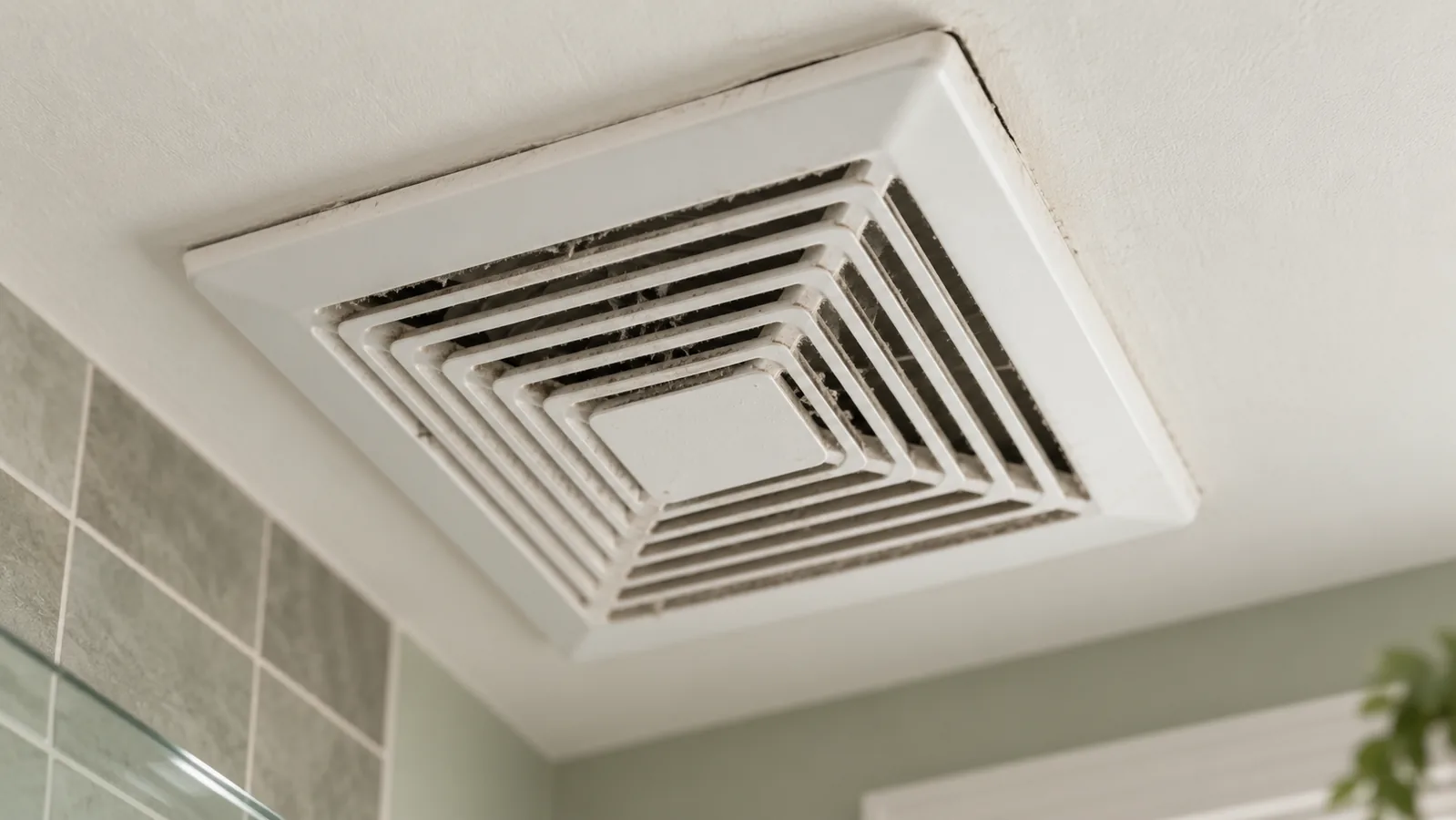
Match the noise to the next safe action
Listen from the floor before touching the fan. Note the sound, when it begins, and whether airflow also seems weaker. Then use the table as a triage guide—not proof of a failed part.
| What you hear | What it may indicate | Next safe action |
|---|---|---|
| Light rattle or chatter | A loose grille, clip or accessible cover; dust can also make vibration more noticeable. | Isolate power. Follow the model instructions to clean and reseat only user-serviceable parts. |
| Hum or buzz with slow or failed starting | A motor, control or electrical fault may be involved. | Switch it off. Do not keep cycling it; arrange qualified service. |
| Scraping, grinding or knocking | Mechanical contact or internal wear may be present. | Stop the fan and arrange service. Grille cleaning is not a repair for internal wear. |
| Steady rush or whistle | The grille, damper or duct path may be restrictive, or the installed airflow may simply be noisy. | Clean the grille if permitted and inspect the outdoor termination only from a safe, accessible location. Leave hidden duct diagnosis to a professional. |
| Noise immediately after cleaning | A grille or spring clip may not be seated as before. | Isolate power and compare reassembly with the product instructions. Never force a clip or run the fan with loose parts. |
A published sound rating cannot identify a new fault. For the difference between rated sound and installed noise, read how bathroom fan sones work.
Six low-risk steps
- Stop for electrical or mechanical warning signs. Switch the fan off and leave it off if there is smoke, a burning or electrical smell, sparking, unusual heat, repeated breaker trips, water at electrical parts, or severe scraping or impact.
- Describe the sound before touching anything. From the floor, note whether the sound is a rattle, hum, buzz, scrape, grind, whistle or steady rush, and whether it starts immediately or after the fan warms up.
- Isolate power before a visual check. Turn the fan off and isolate its circuit according to the manufacturer instructions before touching the grille. Do not open wiring compartments, handle conductors or work on energized parts.
- Clean only accessible dry parts. If the product instructions allow it, remove dry dust from the grille and reachable surfaces without wetting the motor, disturbing wiring or reaching into hidden ductwork. See the separate bathroom exhaust fan cleaning guide for the same safety boundary.
- Reseat only user-serviceable parts. Reinstall the dry grille and any user-serviceable clips exactly as the manufacturer describes. Do not force parts or tighten hidden electrical or structural connections.
- Retest briefly and choose the next action. Restore power only after reassembly, listen from the floor and stop if the sound persists, worsens or is joined by heat, odor or poor starting. Arrange qualified service when the cause is not an accessible loose grille or dust buildup.
Separate noise from airflow
A fan can sound loud yet move too little air, or sound normal while a blocked route limits performance. If the electrical and mechanical warning signs are absent, use the safe bathroom fan airflow checks. If the route itself is uncertain, follow the guide to confirm where bathroom exhaust terminates. Do not use smoke, flame or hands near a moving blower.
When cleaning is enough—and when it is not
- Reasonable owner check: dry dust on an accessible grille or a grille clip that the manual identifies as user-serviceable.
- Service call: grinding, repeated scraping, persistent heavy vibration, a worn motor sound, inaccessible duct restriction, or noise that remains after correct reassembly.
- Electrician: burning odor, smoke, sparking, heat, repeated breaker trips, water at electrical parts, damaged wiring or buzzing with poor starting.
If the fan returns to normal but moisture still lingers, continue with the bathroom condensation recovery checklist rather than assuming sound alone measures ventilation.
Sources and editorial scope
This article supports hazard triage and low-risk maintenance. It does not diagnose a motor, energize exposed parts, inspect hidden wiring or replace model-specific instructions.
- Broan-NuTone: Help! My Bath Fan Sounds Like a Lawnmower! — manufacturer discussion of loose parts, dust buildup and motor replacement as possible noise causes.
- Panasonic ventilation-fan instructions — an example of model-specific installation, operation and service boundaries.
- U.S. Department of Energy: Selecting Ventilation Systems for Existing Homes — system-level context for equipment, controls, ducting, installation and commissioning.
Editorial note: DryBath Guide Editorial reviewed the diagnostic scope, safety boundaries, internal links, structured data and source attributions on September 25, 2026.